If you’re a Director or senior leader in a go-to-market function, you’ve likely heard some version of this: “Do great work and you’ll be recognized.”
In today’s revenue leadership environment, that advice is incomplete. Your work doesn’t always speak for itself—people do.
The leaders who reach the C-suite aren’t just strong performers. They’re supported by a network of advocates who speak on their behalf in rooms they’re not in—a personal board of advisors.
I think of this as a deliberately built group of mentors, sponsors, and peers who don’t just offer guidance, but actively create opportunities.
Mentorship vs. Sponsorship: Why the Distinction Matters
Many women in leadership roles tend to over-index on mentorship. Mentorship is valuable, but it can become over-structured, overly abundant, and, at times, passive.
Sponsorship is different—and essential.
Mentors give advice. Sponsors create opportunities.
Mentors talk to you. Sponsors talk about you—positively and strategically.
Sponsorship is what gets your name raised for high-visibility projects, promotions, and critical initiatives. It’s advocacy in action. While mentors can become sponsors, it requires a clear shift in expectations and communication.
The challenge is that most women already know who their potential advocates are—but haven’t intentionally built those relationships.
Go Beyond Networking: Build Real Advocacy
If your networking efforts feel transactional or overly polite, it may be time to rethink your approach.
Building a personal board of advisors isn’t about collecting contacts. It’s about cultivating relationships that influence both business outcomes and career growth.
Three Rules of Effective Sponsorship
Give before you expect to receive.
Advocacy is reciprocal. If you’re not actively supporting others, it’s unlikely you’ll receive support in return. Highlight your team’s contributions in executive settings, use names when recognizing wins, and make sponsorship a consistent practice.
Prioritize natural alignment.
The most effective sponsorships develop organically. You operate in overlapping circles, connect on multiple levels, and support each other in ways that evolve with business needs. When the relationship is authentic, you’re more likely to be top-of-mind in critical conversations.
Recognize sponsorship as a growth accelerator.
Sponsorship is often the fastest path to new opportunities. It ensures you’re considered for roles and initiatives even when you’re not in the room. Surround yourself with people who will advocate for you when it matters most.
Craft a Visibility Plan That Drives Advocacy
Advocacy is built on visibility—but visibility doesn’t happen by accident. It requires a clear, intentional plan.
Identify key stakeholders.
Who influences decisions that impact your growth? Which conversations or forums do you want to be part of?
Align your work to their priorities.
Understand what matters most to leadership and focus on work that directly supports those priorities. Stay aligned to your role, highlight both strengths and growth areas, and be clear on what differentiates you.
Create opportunities to showcase impact.
Share results in executive forums, communicate consistently in the channels your stakeholders use, and seek opportunities to contribute to higher-level discussions when appropriate.
Finally, close the loop. Ask for feedback: How was this work received? What should come next? This not only strengthens alignment, but also keeps you visible in ongoing conversations.
In a virtual environment, visibility requires even more intention. Write your plan down. Make it visible to both you and your sponsors.
Build a Board—for Yourself and Others
Strong leaders don’t just build their own board of advisors—they help create it for their teams.
This starts with consistent, visible action:
- Understand your team members’ goals
- Highlight their strengths to leadership
- Help them identify and close skill gaps
- Make purposeful introductions to key stakeholders
- Advocate for them clearly in high-visibility settings
If you want your team to be seen, you have to speak for them. That’s what real sponsorship looks like.
Scale Your Efforts with AI
AI can be a powerful tool to operationalize and scale your visibility and advocacy efforts as you build your board of advisors.
While it can streamline communication—helping tailor updates for Slack, presentations, and executive emails—its most valuable application is in simulating stakeholder feedback.
This is one of the most effective ways I use AI. By mirroring the tone, preferences, and even the skepticism of key executives, it allows you to pressure-test ideas, refine your messaging, and anticipate reactions before stepping into the room.
That level of preparation is more than helpful—it accelerates trust and strengthens credibility with the very people you want as sponsors.
Conclusion: Build the Room Before You Need It
Careers rarely stall due to lack of performance. More often, they stall due to a lack of advocacy.
Building a personal board of advisors ensures you’re not navigating leadership alone. It expands your access to mentorship, strengthens sponsorship, and accelerates your path to the C-suite.
Your career operating system may not be broken—but it may be outdated. The upgrade is intentional: surround yourself with people who don’t just support your growth, but actively help make it happen.
—————————
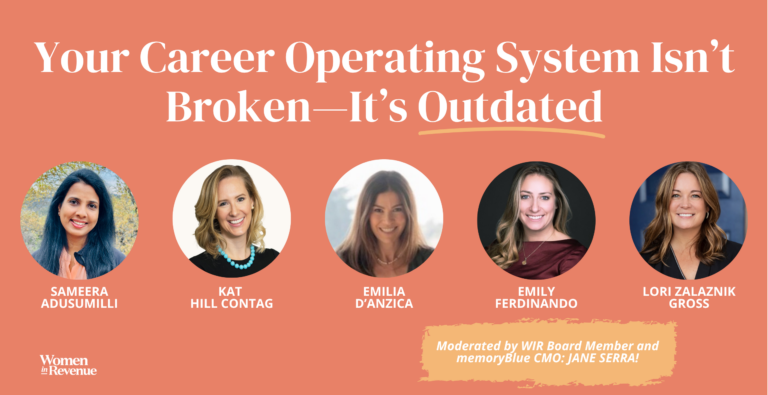
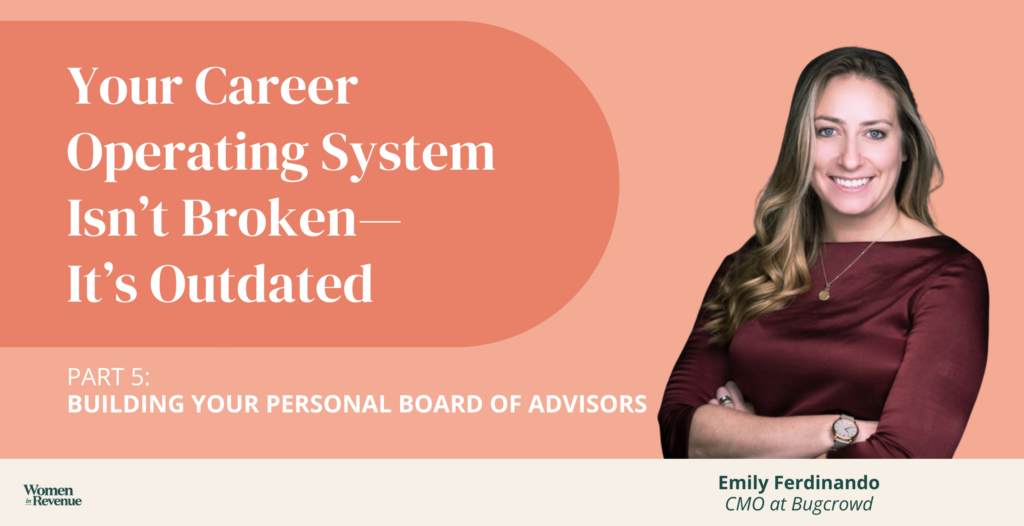
Emily Ferdinando’s presentation on Your Personal Board of Advisors, was part of the Women in Revenue members-only Mini-Series: Your Career Operating System Isn’t Broken—It’s Outdated.
Emily Ferdinando is a go-to-market leader with a focus on pipeline and revenue growth. She brings 15 years of GTM leadership experience, specializing in optimizing operational processes and data-driven strategy. Emily is currently the CMO at Bugcrowd where she brings a unique approach to Marketing focused on down-funnel impact and top line growth.
To gain access to all Women in Revenue events and resources sign up to be a member here.